College of Education Center for Research and Innovation in Technology-Enhanced Learning

About

Mission Statement

ITEL will advance the science and design of educational technologies that expand learning opportunities across all ages, settings, and communities.

Building on years of collaborative research and design at the University of Illinois Urbana-Champaign, ITEL brings together researchers, educators, and designers from across disciplines to develop new technologies that support learning and to study their impact on individuals, institutions, and communities.

History

ITEL was established in 2025 at the University of Illinois Urbana-Champaign's College of Education to build lasting infrastructure for research and design at the intersection of emerging technologies and the science of learning. While innovative work in this space has long been happening across the Illinois campus, these efforts have often occurred in isolation of each other, limiting the collaborations and scaled-up impact they could achieve. ITEL was created to change that, providing a consolidated center point that fosters synergies, amplifies individual efforts, and positions Illinois as a national leader in this critical field.

ITEL grew out of years of interdisciplinary collaboration among faculty and researchers from across the Illinois campus, building on the College of Education's deep strengths in learning research, educational equity, and technology design. The College is uniquely positioned to lead in this space, bringing together expertise from education, engineering, computer science, and the learning sciences to pursue work that is rigorous, creative, and socially responsible.

Services

ITEL serves a broad community of researchers, educators, students, and practitioners working at the intersection of technology and learning. Our work spans K–12 schools, universities, community centers, museums, and other informal learning environments. We are especially committed to learners who have historically been underserved by educational technology, including multilingual students, students with disabilities, and communities in the Global South.

ITEL provides tangible support for faculty and students conducting basic and use-inspired research on how people learn with new technologies, and creates opportunities and resources for affiliate faculty and students to design and build new technologies. ITEL also offers methodological expertise to those engaged in research and evaluation of learning technologies, and leads dissemination efforts for research findings and innovative technologies that have the potential for local and global impact.
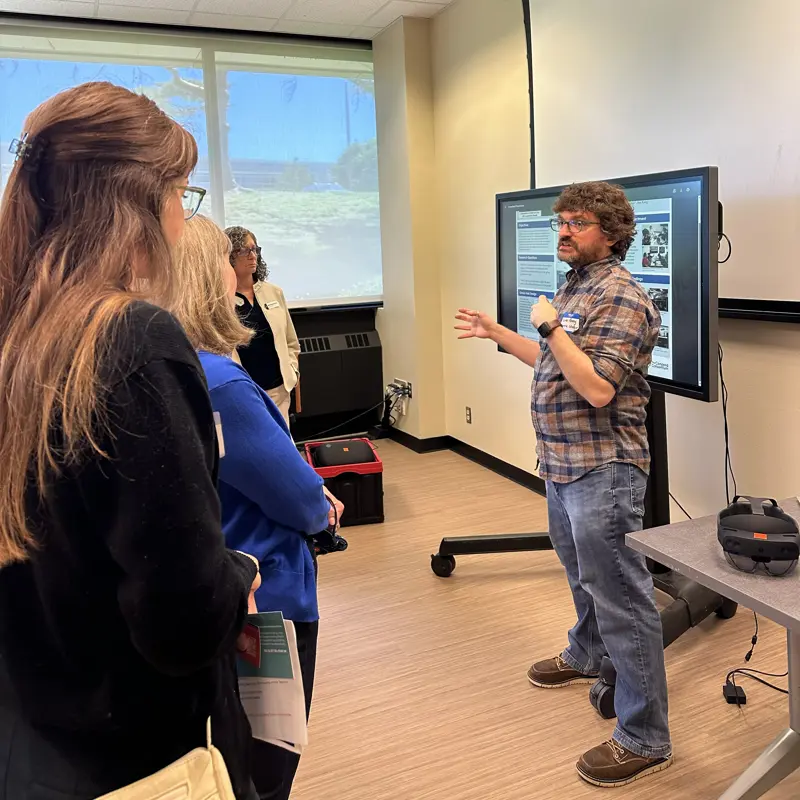
demo-poster2

Themes

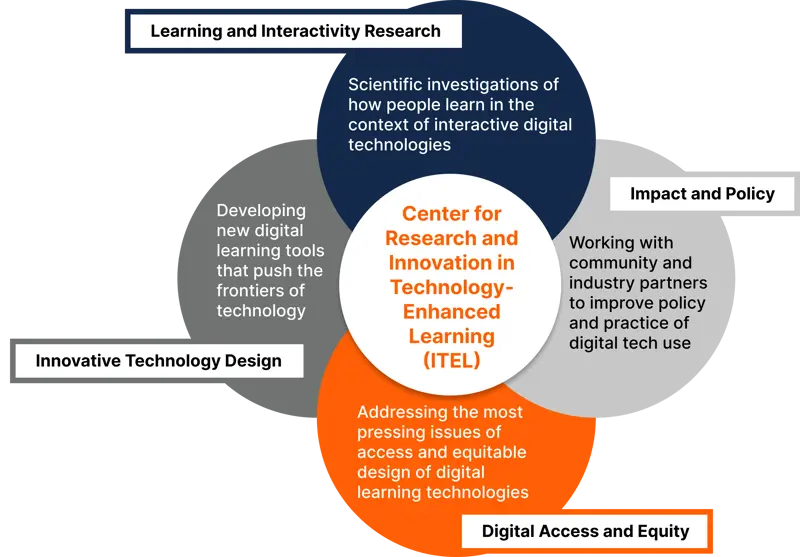
At the heart of ITEL's work are four research and practice themes.

Learning and Interactivity Research

Learning and Interactivity Research encompasses scientific investigations of how people learn in the context of interactive digital technologies, including studies of collaborative learning, embodied learning, computational thinking, learning with multimedia, and the potential roles of generative AI in shaping the kinds of interactions that learners have with these technologies. ITEL makes resources available for conducting this research, including equipment, participant pools, and seed funding, and consolidates methodological expertise that is shared within the College and across campus.

Innovative Technology Design

Innovative Technology Design entails developing new digital learning tools that push the frontiers of technology, including building multi-device platforms for individual and group learning, developing tools for AI applications in education, applying machine learning and sensor technologies to enhance educational experiences, creating gamified and immersive learning experiences, and developing assistive technologies. ITEL provides development support including programming and design expertise, and cultivates interest and investments from industry, state and federal agencies, and community partners.

Impact and Policy

Impact and Policy involves working with community and industry partners to improve the policy and practice of digital technology use, including developing research-practice partnerships to enhance teacher professional development in using digital technologies for STEM, investigating the impacts of technology programs in schools, and developing action research with justice-centered pedagogies.

Digital Access and Equity

Digital Access and Equity addresses the most pressing issues of access to and equitable design of digital learning technologies, including developing technologies to support the learning of minoritized youth and multilingual learners, designing tools that are culturally responsive to people in places historically underrepresented such as the Global South, and providing guidance and resources to foreground these issues rather than making equity and social justice an afterthought to the design, development, and dissemination of new technologies.

Across all of these areas, ITEL supports faculty and student research, provides technology design and development resources, cultivates partnerships for real-world implementation, and leads dissemination of findings and innovations to audiences within Illinois and beyond.

Four circles, each labeled with the theme name and description, around the center

College of Education Center for Research and Innovation in Technology-Enhanced Learning